New Building 1912: A Stone Apartment House Rises in the Kaiku Block
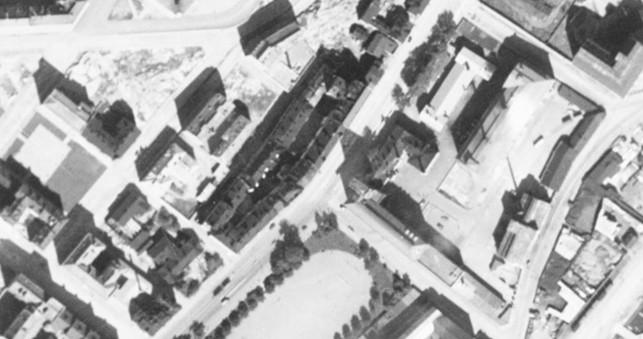
After the villa phase of the Kaiku block had come to an end and the Kallio town plan had been confirmed, the prerequisites for a new, dense urban structure were in place. At Hämeentie 26, this meant a transition from a garden-like villa area into part of a large urban block with a continuous stone street façade.
The founding meeting of the housing company Asunto-osakeyhtiö Laaksola was held on May 8, 1911, where it was decided to purchase plot no. 23 in block 331, then addressed as Itäinen Viertotie 23 – today Hämeentie 26. The plot had previously been part of the Kaiku villa estate but had, through the new town plan, become part of a rapidly developing stone-built city.
The building represents a so-called first-generation stone apartment house: there was no prior building stock on the site, not even a villa. Upon completion, Hämeentie 26 was Kallio’s 64th stone building, the 42nd stone residential building, and the seventh stone residential building along Hämeentie. It thus became part of the very earliest core of Kallio’s stone city.
The building was designed by Helsinki-based master builder Leuto Armas Pajunen (1888–1950). Before the First World War, master builders were responsible for more than half of the design work of Helsinki’s large housing companies. This was due to a severe housing shortage and the fact that architects had not yet widely specialized in residential design.
During his career, Pajunen designed more than 30 residential properties in Helsinki, particularly in the Töölö area. He is also known for developing and designing so-called central kitchen houses, as well as for creating housing solutions tailored to independent, working women.
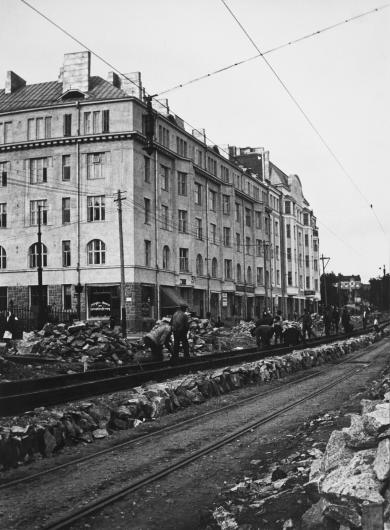
In addition to hired laborers, future residents also took part in the construction work and were paid wages. During construction, disputes arose regarding supervision and progress, and the master builder was even dismissed from his position. However, the decision was soon reversed, as his dismissal was deemed likely to cause even greater delays.
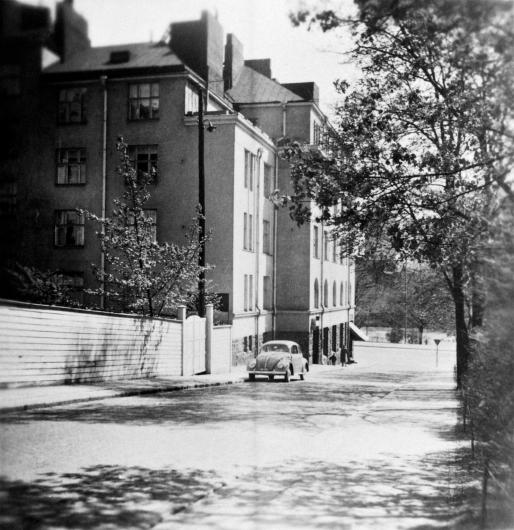
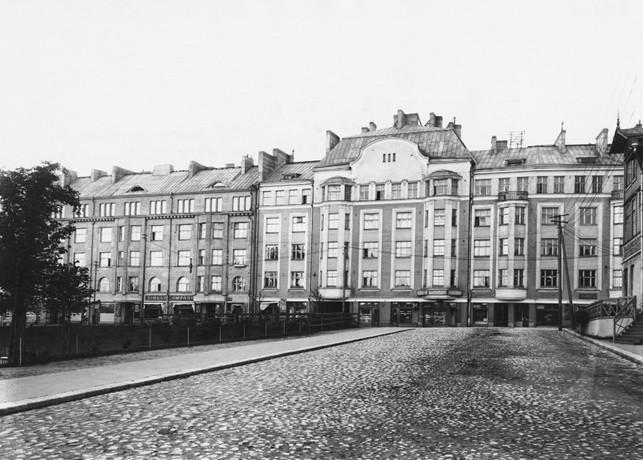
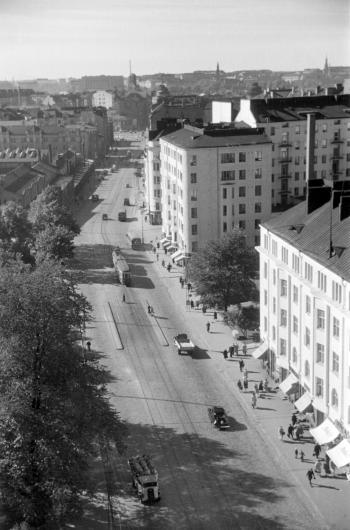
The building was executed as a perimeter block arranged around an inner courtyard. The sections facing Hämeentie and Kaikukuja are five storeys high, while the wing facing Pengerkuja is lower. This solution follows the early block structure of Kallio, where building masses adapt to differences in street levels and scale.
At street level along Hämeentie, the ground floor originally housed commercial premises owned by the company, known as “puotihuoneet” (shop units). Early tenants included, among others, the postal service, the Helsinki General Food Association, a dairy shop, a sewing machine store, a photography studio, and several smaller retail businesses. On the Pengerkuja side, there were commercial, storage, and residential spaces, as well as the original laundry facility.
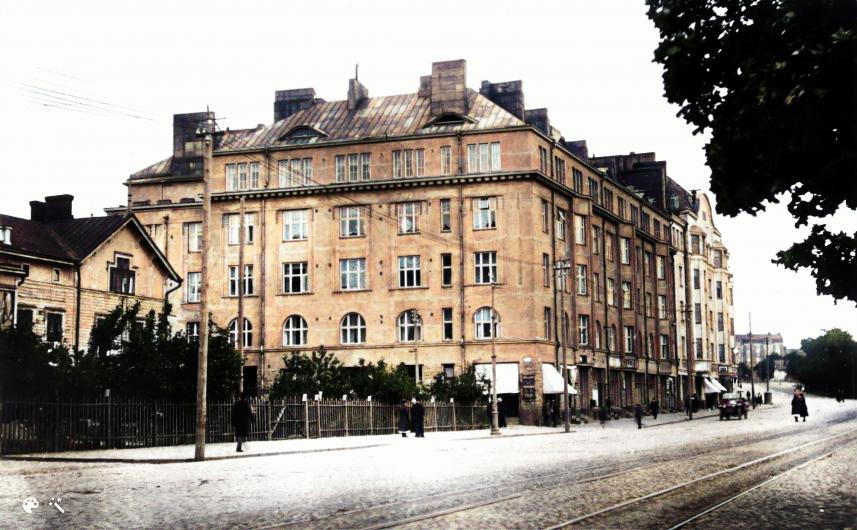
Architecturally, Hämeentie 26 represents late Art Nouveau (Jugendstil). The building’s solidity is emphasized by a high granite plinth and a distinct horizontal string course separating the street level from the upper floors. The façades are rendered over fired red brick and painted in reddish-brown tones, enlivened by white-rendered vertical fields and an ornamental frieze on the top floor.
The façade features bay windows, and the shape and division of windows vary by floor. The lower floors have larger and more decorative windows, while the top floor windows are smaller and divided into four panes. The original shopfront doors and windows at street level were wooden and multi-paned, typical of commercial architecture of the period.
At the time of its completion, the building was technically advanced. Running water and sewage systems were installed in every apartment during construction, and some of the largest units even included bathrooms. This was remarkable at a time when, even in the 1930s, a significant portion of Kallio’s apartments still lacked piped water.
Structurally, the building represents an early combination of concrete and steel: the intermediate floors consist of concrete-encased steel beams, the ground floor is a slab-on-ground reinforced concrete structure, and the load-bearing partition walls are masonry brick walls. The roof is a complex, seamed metal roof, with drainage handled through eaves gutters and downpipes.
The stairwells are a key part of the building’s architectural expression. Polished concrete floors, exposed structural elements, marble-painted wall sections, and decorative ceiling paintings reflect the era’s conception of dignified yet rational urban living. The stairwells were not merely circulation spaces, but representative interiors emphasizing the building’s status.